Hamilton’s $40,000 Basement Apartment Grant: How It Works in Ancaster and Dundas (2026)
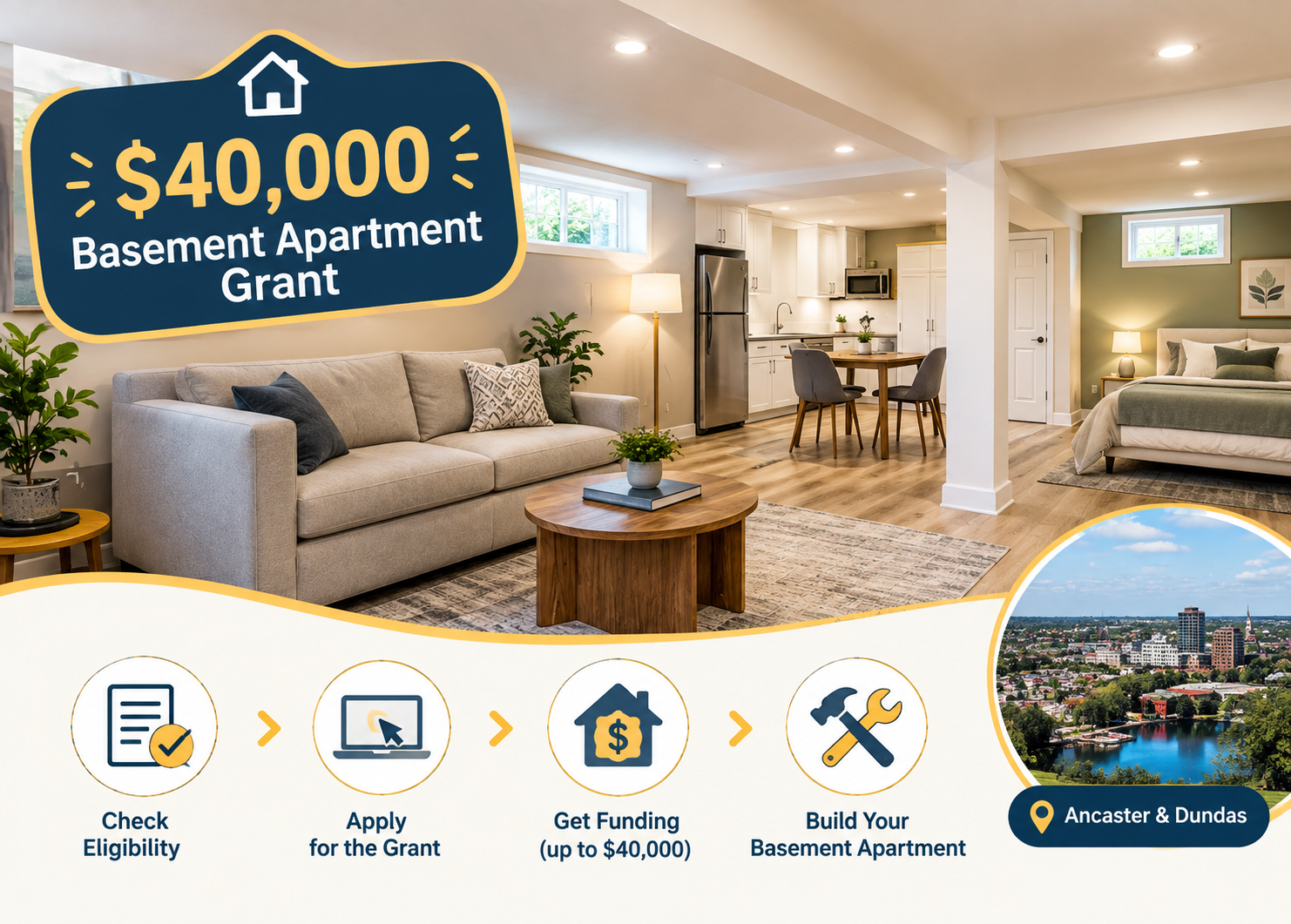
The City of Hamilton’s Additional Dwelling Unit and Multi-Plex Housing Incentive Program provides a grant of up to 70 percent of eligible construction costs, to a maximum of $40,000 per unit, toward a legal basement apartment, garden suite, or other additional dwelling unit. To qualify, your property must be within the program’s designated area, your building permit must be issued on or after October 9, 2025, and the occupancy permit must follow within 18 months of the City’s conditional approval or by August 4, 2027, whichever is earlier.
Important: program terms, funding, and eligibility boundaries are set by the City of Hamilton and can change, and applications are approved at the City’s discretion, subject to available funds. What follows reflects the City’s program guide as revised in February 2026. It is a general guide, not a guarantee that your property qualifies. Always confirm the current rules and your specific eligibility directly with the City before you plan a budget around this. We help our clients do exactly that as part of the project.
Grant basics at a glance
| Feature | Detail |
| Maximum grant | Up to $40,000 per unit |
| Share of eligible cost | Up to 70% |
| Applies to | Legal basement suites, garden suites, and multi-plexes of six or fewer units |
| Permit timing | Building permit issued on or after Oct 9, 2025; only costs incurred after permit issuance count |
| Payment | Two advances: up to $8,000 after permit issuance, balance after occupancy permit |
| Deadline | Occupancy permit within 18 months of conditional approval or by Aug 4, 2027, whichever is earlier |
| Eligibility | Depends on area and conditions; confirm with City |
What the program is
Hamilton has been encouraging additional dwelling units, legal secondary suites like basement apartments and garden suites, to add housing supply. The incentive helps offset the cost of building one by covering a share of eligible construction costs up to the maximum. For an Ancaster or Dundas homeowner considering a legal basement suite, that can meaningfully lower the out-of-pocket cost of a project that also generates rental income.
How the grant is paid
The grant is paid in two advances, not as a single cheque. The first, 20 percent of the estimated grant to a maximum of $8,000, is paid once your building permit is issued and the City has approved your construction cost estimate. The second, based on your actual eligible costs, is paid after the occupancy permit is issued, an Electrical Safety Authority Certificate of Acceptance is on file, and your invoices are approved.
Eligible costs are limited to items required under the building permit and incurred after it is issued, such as building materials, labour, and new or upgraded HVAC and plumbing. Appliances, decorative items, financing costs, consulting fees, and the cost of preparing permit drawings are not eligible. Because the balance arrives after occupancy, you will need to finance construction up front. The City can also require the grant to be repaid with interest if the agreement is breached, including if you sell or transfer the property before the grant is fully paid out.
Timing matters too. Under the current program guide, the occupancy permit must be issued within 18 months of conditional approval or by August 4, 2027, whichever comes first, so the design, permit, and construction schedule needs to be realistic from the start.
Who may be eligible
In general terms, eligibility tends to hinge on factors like these, though the City sets the exact rules:
- The property is within the program’s designated area. Not every Hamilton address qualifies (Sub-Area 2, Roxborough, is excluded), so confirm yours with the City.
- The unit is a legal additional dwelling unit that complies with Hamilton’s zoning by-law and the Ontario Building Code, with proper egress, fire separation, and ceiling height.
- The building permit is issued on or after October 9, 2025, before you incur the costs you want covered. Costs incurred before permit issuance are not eligible.
- The project meets the program’s construction and inspection requirements, including an occupancy permit and an Electrical Safety Authority Certificate of Acceptance.
You are the registered owner, property taxes and mortgage payments are current, insurance is in place, and there are no outstanding property standards, building code, or fire code orders on the property.
Because Ancaster and Dundas are part of the City of Hamilton, homeowners there may be eligible for this program. Burlington and Oakville homeowners are not, since it applies only to Hamilton properties, though Burlington, for example, has run its own additional residential unit incentive with different terms. If you are on the Hamilton side of the boundary, it is well worth checking.
Why a legal suite, not an unpermitted one
The grant only applies to a legal, permitted unit, and that requirement protects you regardless of the funding. A legal basement apartment needs a code compliant egress window, fire separation between units, adequate ceiling height, and proper permitting. An unpermitted suite can be unsafe, can put your insurance coverage at risk, is ineligible for any grant, and is a liability at resale. Building it right is the only version that works.
The numbers can be compelling
Rough math. A legal basement apartment in the Hamilton, Burlington, and Oakville area typically costs $90,000 to $140,000 to build properly, depending on scope. If your Ancaster or Dundas property qualifies, the grant could offset up to $40,000 of eligible costs, and the rest, plus the wait for the second payment, is yours to finance. Combined with the rental income a legal suite generates, the payback on the remaining investment can be reasonable. We cover the income side in our legal basement apartment investment guide, and you can download our cost guide for a broader look at renovation budgets.
We build legal, permitted additional dwelling units in Ancaster and Dundas, and we can help you confirm eligibility, structure the project to meet the program, and handle drawings, permits, and inspections. We are licensed and insured, build to the Ontario Building Code, and back every project with our three-year workmanship warranty. Because the details can change, we verify current terms with the City as part of planning. Reach out for a free consultation to see whether your property could qualify.
People Also Ask
How much is Hamilton’s basement apartment grant?
Up to 70 percent of eligible costs to a maximum of $40,000 per unit for a legal additional dwelling unit, for building permits issued on or after October 9, 2025. Terms are set by the City and can change, so confirm directly.
Do Ancaster and Dundas qualify?
They are part of Hamilton, so properties there may qualify if within the designated area and meeting conditions. Confirm each address with the City.
Do Burlington or Oakville homeowners qualify?
No. This program is run by the City of Hamilton and applies only to eligible Hamilton properties. Burlington has offered its own additional residential unit incentive with different terms, so check with your city for what is currently available.
Does the grant apply to an unpermitted suite?
No. It applies only to a legal, permitted unit, and the building permit must be issued before you incur the costs the grant covers.
Can I get the grant after building?
Generally no. The City does not decide on an application until a building permit has been issued, only costs incurred after permit issuance count, and a grant agreement is required before funds are advanced. Talk to the City before construction starts.
What is an additional dwelling unit?
A self-contained secondary residence, most often a legal basement apartment, but also a garden suite or a unit within the home.
Is the grant a loan or does it need repayment?
It is structured as a grant, not a loan, and is paid in two advances. However, it must be repaid with interest if you default on the grant agreement, for example by missing the occupancy deadline or selling or transferring the property before the grant is fully paid out. Terms can change, so confirm the current structure with the City.
How long does the application take?
It varies. The City decides on your application only after your building permit is issued, and the occupancy permit must follow within 18 months of conditional approval or by August 4, 2027, whichever is earlier. We help coordinate the process with the City so timing and requirements are clear before you commit.
Is there a deadline to use the grant?
Yes. Under the program guide revised in February 2026, the occupancy permit must be issued within 18 months of conditional approval or by August 4, 2027, whichever is earlier. Confirm current dates with the City before you start.
Can I combine the grant with financing?
Often yes. Many homeowners use financing for the balance beyond the grant, and because much of the grant is paid after occupancy, construction usually has to be financed up front. Confirm with your lender and the City.
Does the suite have to be rented?
The current program guide does not set a rent or affordability requirement, unlike some other municipal programs that tie forgivable loans to rent caps. The unit does need to be a legal dwelling that receives an occupancy permit. Confirm current conditions with the City.
What makes a basement apartment legal in Hamilton?
Proper egress, fire separation, adequate ceiling height, and a building permit, all built to the Ontario Building Code.
Can garden suites qualify too?
Yes. The program covers garden suites as well as basement units and multi-plexes of six or fewer units, subject to the same conditions. Confirm your specific plan with the City.
Will a legal suite raise my property taxes?
It can affect assessed value. Weigh that against the rental income and grant. We can point you to the right questions to ask.