Do You Need a Permit to Finish a Basement or Renovate in Burlington and Oakville?

Yes, a lot of renovations in Burlington and Oakville need a building permit, including finishing a basement, moving or adding walls, relocating plumbing, and any structural change. Electrical work, such as a panel upgrade or new circuits, needs its own permit through the Electrical Safety Authority (ESA). Cosmetic work like painting, flooring, or swapping a fixture in place usually does not. Getting this right matters, because unpermitted work causes real problems at resale and can put legal liability on you.
Permits feel like a hassle, but they exist to keep work safe and to code, and a good contractor handles the whole thing. Here is the plain English version of what needs one and what does not.
Permit quick reference
| Project | Permit Needed? | Notes |
| Painting, flooring | No | Cosmetic only |
| Swap fixture in place | No | Like-for-like |
| Finish a basement | Yes | Even without a bedroom or bath; new wiring also needs an ESA permit |
| Move plumbing | Yes | Relocating fixtures |
| Panel upgrade | Yes | Separate ESA electrical permit, not a municipal one |
| Remove a load-bearing wall | Yes | Structural check |
| Addition or second unit | Yes | Plus detailed drawings; engineering if structural |
The line to remember
The simplest rule: if you are changing structure, plumbing, electrical, or the building envelope, you probably need a permit. If you are only refreshing finishes, you probably do not. Building permits come from your municipality, while electrical permits come from the ESA. When you are unsure, the safe move is to confirm before design work is done, not after. We check this for every project so nothing surprises you mid-build.
What happens if you skip a permit
Skipping a required permit can feel like a shortcut, and it is one of the more expensive mistakes we get called in to unwind. If the city finds unpermitted work, you can be ordered to open finished walls for inspection or redo the work. At resale, buyers and their lawyers ask about permits, and unpermitted renovations can lower your price or kill a deal. Insurance claims can also be denied if they trace to unpermitted work. The time saved is not worth any of that.
How long do permits take?
Ontario’s Building Code gives the municipality 10 business days to decide on a complete application for a typical house, and longer for larger buildings. In practice, total time depends on how complete the drawings are, how many revisions the reviewer requests, and how busy the building department is. Interior work like a basement usually takes a few weeks, while additions and other larger projects take longer. Basement bedrooms need code-compliant egress windows, and legal second units have specific fire separation and ceiling height rules that the permit process checks. Electrical permits are handled separately through the ESA. We manage the whole process, drawings, application, and inspections, so it moves smoothly.
We prepare and manage the permit application, coordinate inspections, and build to the Ontario Building Code so the work is ready to pass. We are licensed and insured, and every project carries our three-year workmanship warranty. Planning a basement or renovation in Burlington or Oakville? Reach out for a free consultation.
People Also Ask
Do I need a permit to finish my basement?
Yes, especially once you add a bedroom, bathroom, or second unit. We handle it.
What renovations do not need a permit?
Painting, flooring, and swapping fixtures in place. Structural changes and plumbing relocation need a building permit, and panel upgrades and new wiring need an ESA electrical permit.
How long does a building permit take in Oakville or Burlington?
Ontario’s Building Code gives the municipality 10 business days to decide on a complete house application, but real-world timing depends on how complete the drawings are and how many revisions are needed. Plan on a few weeks for a basement and longer for additions or larger projects, and ask us for current turnaround.
Can I do the work first and get a permit later?
No. Permits must be issued before construction, and after-the-fact permits are costly and sometimes require opening finished work.
What happens if I get caught without a permit?
You can be ordered to expose or redo work, face resale problems, and risk denied insurance claims.
Does a permit increase my property taxes?
Significant additions can affect assessed value, but most interior renovations have limited tax impact. It varies.
Who is responsible if work fails inspection?
Inspectors check the work against the Ontario Building Code, and anything that fails has to be corrected before work moves forward. The property owner is generally accountable to the municipality for compliance, so it matters that your contractor manages inspections and stands behind the work. We schedule inspections, correct deficiencies, and back our work with our warranty.
Do I need a permit to move a kitchen sink?
Yes, relocating plumbing requires a permit. Keeping it in place usually does not.
Are egress windows required in a basement bedroom?
Yes. A legal basement bedroom needs a code-compliant egress window for emergency escape.
Can unpermitted work affect my home sale?
Yes. It can lower your price, delay closing, or end a deal when buyers discover it.
Does finishing a basement need engineered drawings?
Usually not, unless there is structural work. A legal second unit has additional requirements the permit checks.
How much do renovation permits cost?
Fees vary by scope and municipality. We include permit handling in how we plan and price the project.


continue reading
Related Posts
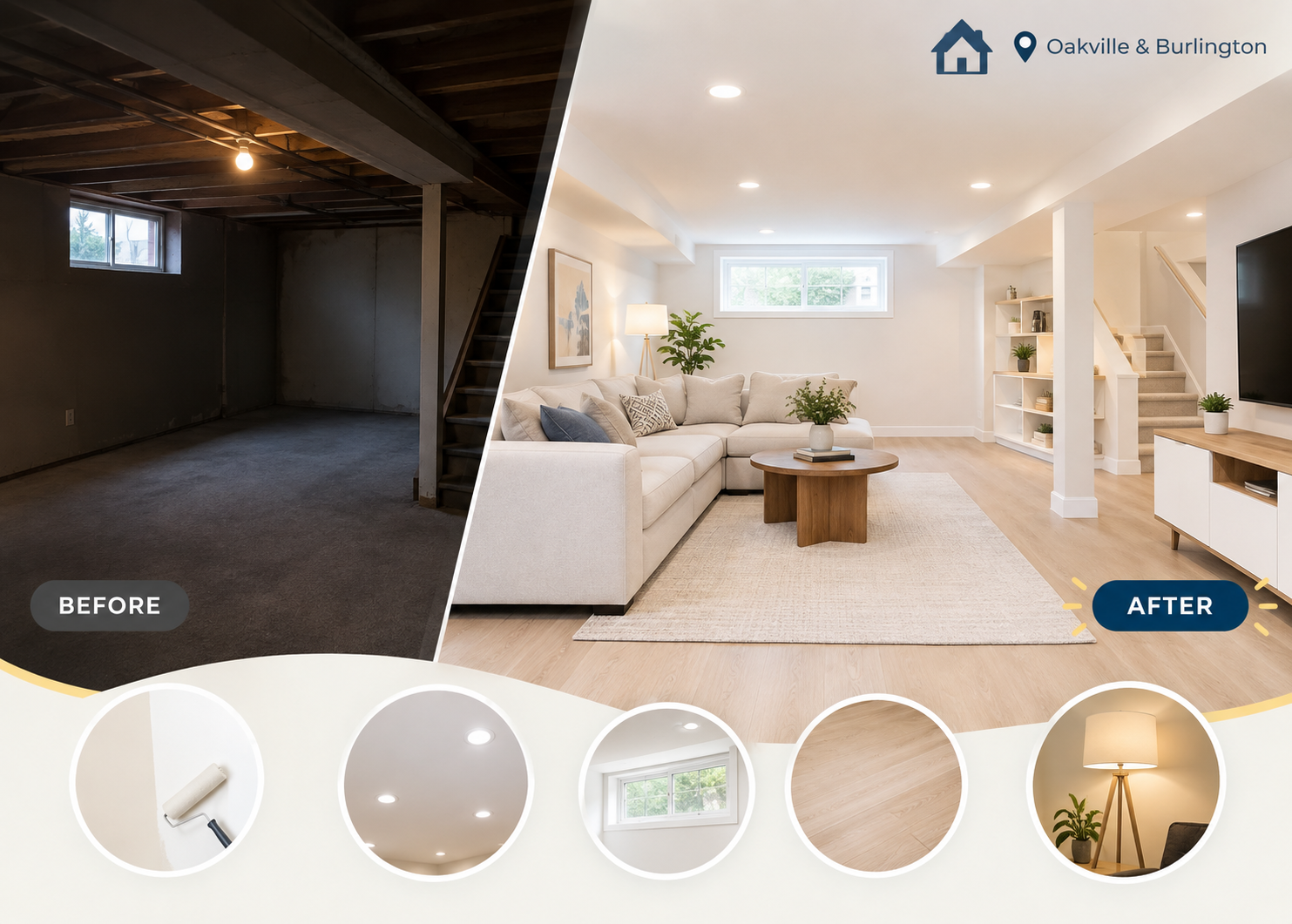
The most effective ways to make a dark basement feel […]