Can I Turn My Basement into a Legal Rental Unit in Burlington

Turning a basement into a Legal Rental space is one of the most common renovation goals among Burlington homeowners. Many want to convert unused lower levels into income generating rooms, independent suites or long term housing for relatives. Since the idea of a Legal Rental is increasingly popular, understanding what the city requires is essential before any construction begins.
The introduction of new regulations in recent years ensures that anyone creating a Legal Rental meets structural, safety and zoning expectations. Because the term Legal Rental carries strict meaning in Burlington, homeowners must approach the project with clarity and awareness.
A Legal Rental must follow codes, pass inspections and meet city guidelines for secondary suites. Without this compliance, a basement cannot be rented legally even if it appears complete. For this reason, homeowners planning a Legal Rental conversion should begin by understanding the framework that governs these units.
Understanding What Makes a Basement a Legal Rental Unit
A legal basement apartment Burlington homeowners can create depends on meeting local and provincial standards. These rules ensure that the unit is safe, accessible and independent from the primary home. A space becomes legal only when it satisfies structural, safety and zoning requirements that apply specifically to secondary dwelling units.
A basement becomes a legal basement apartment Burlington residents can rent out only when the space meets:
- Building code requirements
- Fire safety standards
- Egress window and exit expectations
- Proper ventilation and heating
- Independent kitchen and bathroom setup
- Approved electrical and plumbing
These conditions ensure that the unit is suitable for occupancy. This is where homeowners often start researching renovation services for internal upgrades. For example, those planning bathroom improvements during the conversion may explore bathroom renovation services in Burlington as part of preparing the new unit.
Why Code Compliance Matters for Secondary Dwelling Units
Code compliance is a major requirement when creating a secondary dwelling in Burlington. Homes with unpermitted or unfinished lower levels may fail to meet important safety measures. Without approval, a homeowner cannot legally rent the space or list it as an income suite. This distinction is crucial because the city enforces strict guidelines to protect occupants.
Code compliance requires proper fire-rated construction, smoke and carbon monoxide detectors and specific standards for ventilation. Even if the basement looks finished, it must meet structural conditions that match what is expected in any livable unit. A legal basement apartment Burlington homeowners create must follow these updated rules.
Egress Windows and Safe Exits
Egress windows are among the most important features of a Legal Rental. These windows allow occupants to escape in emergencies. No matter how well designed a basement may be, without proper egress, the unit cannot be approved.
Minimum egress requirements usually include:
- Adequate size for escape
- Accessibility from the main living or sleeping space
- Direct path to the outdoors
If the current basement lacks windows that meet these measurements, a renovation is necessary. The process often includes enlarging openings or installing entirely new units.
Permits Required for a Legal Basement Unit
Permits are mandatory in Burlington before converting a basement into a secondary dwelling. These approvals ensure that the renovation meets city regulations and follows Canadian building codes. The permit process typically includes reviews for structural framing, plumbing changes, electrical updates and exits.
Homeowners must apply for building permits and follow the inspection process until final approval is granted. This ensures that all work aligns with city guidelines. Some homeowners begin exploring additional improvements beyond the basement itself. Those planning related renovations in nearby areas may consider browsing renovation services available in Oakville if their property needs broader updates.
What Makes an Income Suite Safe and Functional
A legal basement apartment Burlington homeowners establish must operate as an independent living space. It must offer privacy, safety and reliable functionality. From electrical wiring to bathroom ventilation, every feature must meet occupancy standards.
A functional income suite usually includes:
- A full bathroom
- A kitchen or kitchenette
- Heating and cooling access
- Proper sound separation
- Dedicated living space
- Adequate natural or artificial lighting
These features ensure the tenant can live comfortably without depending on the main household. Safety features like interconnected alarms and secure exits ensure compliance.
The Importance of Professional Assessments
Before beginning construction, a professional assessment can identify potential barriers to approval. Many basements require structural updates such as raising ceilings, improving drainage, updating insulation or reinforcing walls. A renovator familiar with Burlington code compliance can evaluate conditions and suggest the necessary steps.
Professional evaluations also help estimate real project timelines and costs. This prevents homeowners from starting renovations that later become more complicated due to hidden issues.
Zoning Considerations for Secondary Dwelling Units
In addition to building codes, zoning regulations influence the approval of secondary dwelling units. Some Burlington neighborhoods have specific limitations on lot size, parking and occupancy. These constraints determine whether the property qualifies for a second unit.
Zoning checks usually involve:
- Lot capacity
- Parking availability
- Exterior access routes
- Placement of entrances
- Number of allowed dwelling units
Meeting zoning expectations is essential for the property to be considered legally compliant.
Fire Separation and Soundproofing Standards
For any Legal Rental, sound separation between the main home and the basement is expected. This reduces noise transfer and improves privacy for both occupants. Fire separation is equally essential, providing protected pathways and slowing fire spread.
These standards typically require specific construction materials, sealed openings and fire-rated doors. Ensuring these conditions are met is part of the approval process.
Why Ventilation and Moisture Control Are Critical
Basements naturally face humidity challenges. When converting the area into a legal basement apartment Burlington renters can occupy, proper ventilation becomes essential. Moisture control ensures good air quality and prevents long term structural damage.
Ventilation upgrades may include:
- Mechanical fans
- Bathroom exhaust systems
- Kitchen range hoods
- Dehumidification systems
These installations support healthy living conditions in the income suite.
Creating a Comfortable and Practical Layout
Once code and safety measures are addressed, homeowners can plan the interior layout. This includes organizing rooms for comfort and daily usability. Many choose open layouts to maximize space. Efficient storage solutions also make basement suites more appealing.
Some layouts include:
- Combined living and kitchen spaces
- A private bedroom with proper egress
- Practical bathroom placement
- Functional entry points
A legal basement apartment Burlington homeowners create should feel like a home, not just a renovated lower level.
Finishing Materials and Long Term Durability
Basements require materials that withstand moisture, temperature changes and regular use. The selection of flooring, wall materials and fixtures must suit the environment. Durable finishes also help maintain compliance during inspections and reduce future repair costs.
Common choices include tile, vinyl plank flooring, mold resistant drywall and waterproofing solutions.
Learning Through Local Renovation Resources
Homeowners start researching additional guides and information to support their renovation planning. A helpful place to begin is exploring local renovation resources that offer insights on preparation, planning and timelines. These materials offer general guidance on what to expect when renovating interior spaces, including bathrooms and basements.
If questions arise during planning or if homeowners require clarity about compliance steps, contacting an expert directly can offer more certainty. For inquiries or consultation arrangements, they can reach out through the contact page to learn more about standard renovation processes.
Frequently Asked Questions

continue reading
Related Posts
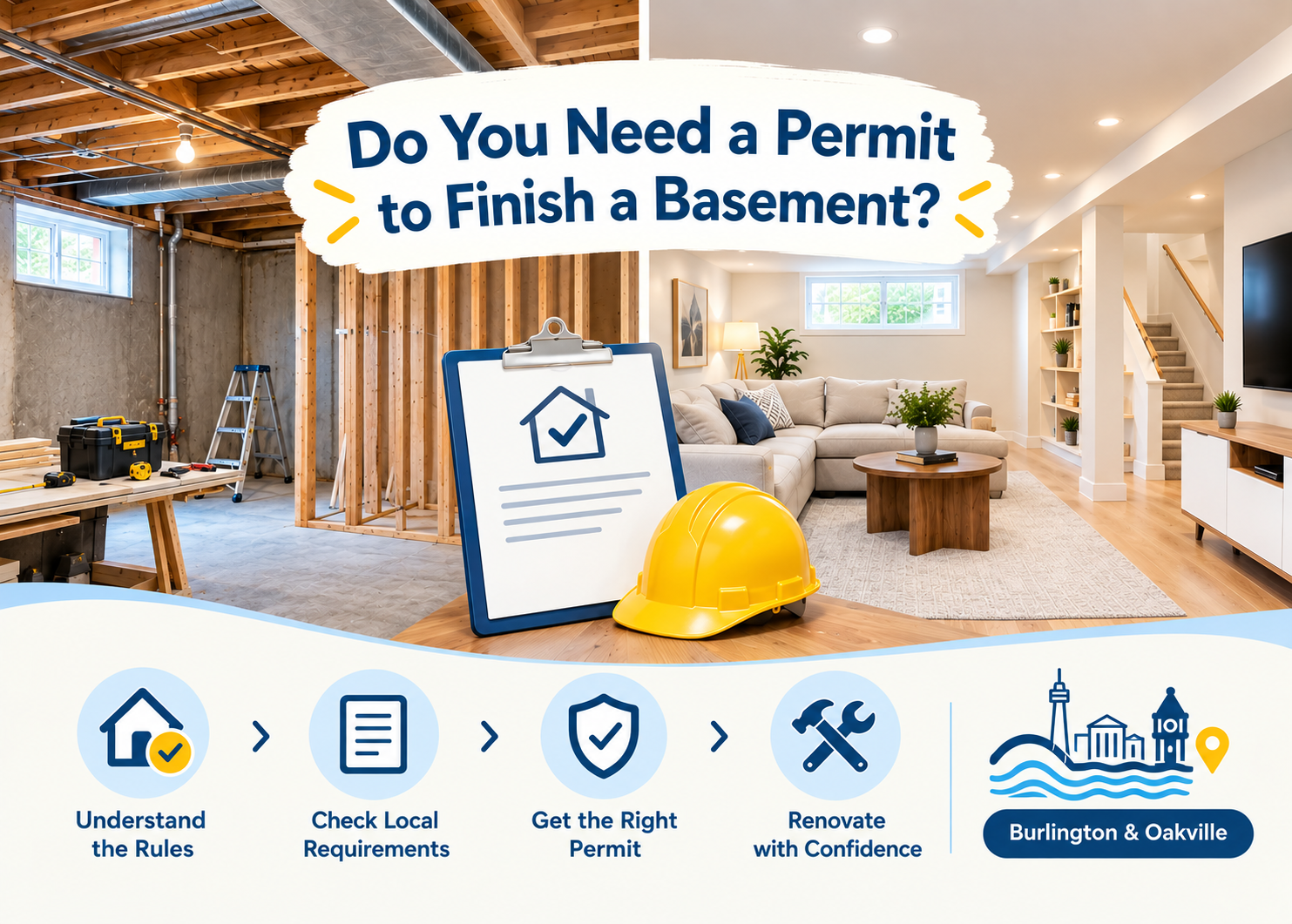
Yes, a lot of renovations in Burlington and Oakville need […]
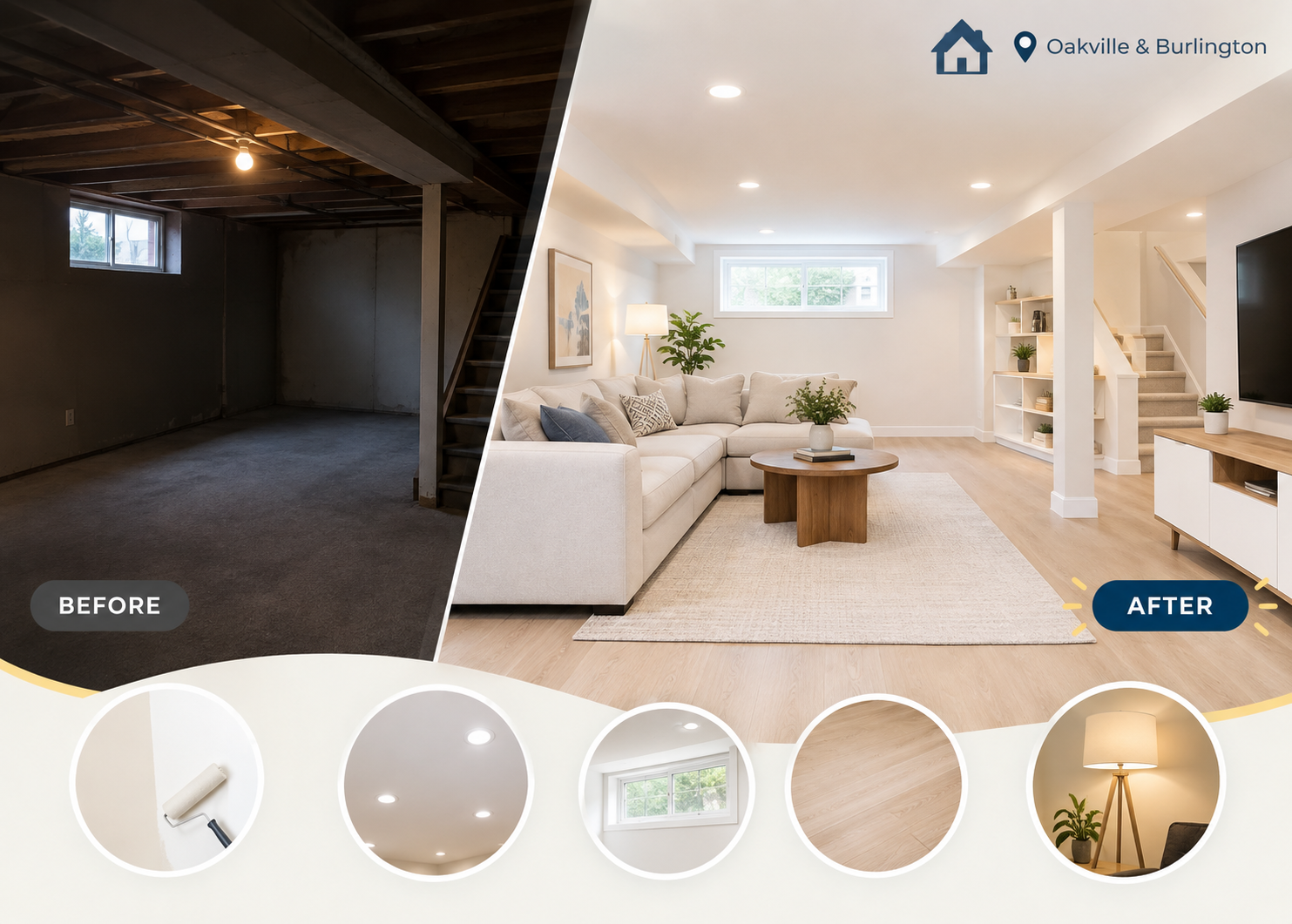
The most effective ways to make a dark basement feel […]